Wednesday, October 23, 2013

Benay Tip: How to Follow and Still Be a Leader


How to Follow and Still Be a Leader


We’ve all experienced that feeling of being overwhelmed with the responsibilities of running a team, a department, or an entire organization, regardless of the size. Everyone needs to focus part of their daily duties on being a leader within their organization, regardless of position. It’s then paramount to use the skills of a follower to be even more effective in the workplace.  When you follow the cues of your staff, coworkers, clients, or even mentors and role models, you’ll be able to learn what’s working in your organization, how to fix or improve it, and how to truly grow your business.


Change Your View of Leadership

Past traditional models of business leaders may have consisted of taking constant meetings in-house to review, evaluate and respond to data. It’s not unusual to picture the manager or CEO remaining separate from staff, creating and maintaining the distinction between boss and employee. I suggest that like Henry V and the battle of Agincourt, you fight with your troops on the battlefront of your business—let them see your own strengths and fortitude! If all you’re doing is creating, reading and evaluating reports and financials, a vital responsibility of any position, you’re not on the front lines of your business, seeing and meeting staff and clients alike. If you are spending all your days behind your desk instead of in front of your employees and customers, you’re doing something wrong. Get up and get out, to industry events, to spend time with staff and customers, and learn what you and the company are doing right (and wrong) and how to improve.

Look Sideways as Opposed to Up and Down

 We have a tendency to view organizations in a hierarchical manner but often people work better and are more productive if they are accountable to a group of equal level co-workers rather than one leader. It’s one thing to let your boss down, it’s another to let your co-workers down, and have them share in the blame. I often am amazed by the constant talk of employers needing to find team players yet not giving them the opportunity to truly participate in being part of a team.  If you delegate leadership & accountability you create many more captains than yourself, who often might have a better skill set, ideas or motivational qualities in a particular area than yourself. Empower your captains and let them participate in growing the troops and business along with you.

Cultivate Your Corporate Culture 

There’s an internal brand and an external brand to every company, and often the chasm between the two are quite wide. We may think of the behemoth Amazon as an incredible company but it has a high turnover rate and a great deal of internal employee dissatisfaction (find article link). While you’re up and out from behind your desk, you’ll be cultivating your own brand and corporate culture to both employees and clients alike.  When was the last time you asked a staff member or client, “What is it that we do best? How can we make the workplace/product/brand better?” Don’t forget to strengthen your internal brand to increase employee retention, internal and external growth. Do so by leading to follow the company focus, energy and culture that you and your staff have worked diligently to create together.

Remember the old adage by Sir James Dewar: 
“The mind is like a parachute;
it works best when open.”

Tuesday, October 22, 2013

Another Big Congrats to Soho Press

At this point, it’s not as much of a surprise as it is a pleasure for us at Benay to see our client, Soho Press in the New York Times Book Review. Soho Crime, an imprint of Soho Press, has recently released The Monster of Florence to American audiences. Written by Magdalen Nabb about several double homicides in Florence, Italy from 1968-1985, The Monster of Florence was published in Britain in 1996 but never made its way to American audiences.

The story revolves around the intuitive detective, Marshal Salvatore Guarnaccia. Guarnaccia may not be the brightest detective but he understands people on a deeper level than most. “He watches, he listens, he asks discreet questions, and his intuitive intelligence (‘He either knew things or he didn’t) gives him insight into minds closed to reason.” The book is written in Nabb’s “expressive style” and “is one of [her] darkest novels, almost shocking in its disenchanted acknowledgement of human brutality.”


Another exciting win for Soho Press. You can read an excerpt of the book on their website.

Thursday, October 3, 2013

Quality Job Ads Can Yield Quality Candidates

Job hunting in this economy for many is like finding a needle in a haystack. With the influx of people into the job market, it can be equally as demanding for an employer to find the right candidate as it is to find a job. Post a job listing? You can expect about half of them to be serial appliers – people who apply to every job they can, whether or not they have the right qualifications. According to this article in the Wall Street Journal, maybe it’s time for employers to spend more time writing a quality job ad. It turns out that a quality ad brings quality candidates. Who’d have thought it?

Wednesday, October 2, 2013

Akashic Books and Tin House Make Flavorwire's "25 Independent Presses That Prove This Is the Golden Age of Indie Publishing"

We just wanted to give a big congratulations to Benay clients, Akashic Books and Tin House for their feature in Flavorwire’s 25 Independent Presses That Prove This Is the Golden Age of Indie Publishing. With all of the publishing doomsayers, it’s nice to see the little engines-that-could pulling strong.
Independent publishing — that is, publishing whatever an individual or small group think is worthy of dumping their time and money into — is nothing new. From Virginia and Leonard Woolf starting up Hogarth Press to the early days of Farrar, Straus and Giroux championing now-iconic authors that other publishers wouldn’t touch, DIY publishing has long been responsible for some of our best literature.

 Here’s what Jason Diamond from Flavorwire had to say about Akashic:

Literature lovers smiled when Adam Mansbach’s Go the Fuck to Sleep became a massive bestseller — not just because of the clever title, but because it was awesome to see this fearless publisher get the mainstream recognition it deserves. And with a mission statement that emphasizes its intention of forever remaining a “independent company dedicated to publishing urban literary fiction and political nonfiction by authors who are either ignored by the mainstream, or who have no interest in working within the ever-consolidating ranks of the major corporate publishers,” Akashic is pretty much the ultimate indie. From its acclaimed Noir series to books on punk-rock history to publishing Melvin Van Peebles, Akashic is doing it on its own terms.

And here’s what he had to say about Tin House:

Going strong as a literary magazine since 1999, this operation based in both Portland, Oregon and Brooklyn has seen its book-publishing wing getting bigger and better with every new book, including titles by Christopher Beha, Lucy Corin, and Matthew Specktor, as well as Zak Smith’s We Did Porn. 
Congratulations to them both! We love to see our clients get the recognition we know they deserve. Here’s to many more years of continued success!

Sunday, September 29, 2013

Digital Undead: How to keep from becoming a social media zombie by estate planning

Every time I log onto LinkedIn, I am asked if I want to become associated with a dearly departed friend. It's more than disconcerting, it's downright macabre. Unfortunately her family doesn't know her login and passwords to her LinkedIn and many other social media sites she was active on. So her friends, family, and social acquaintances are constantly reminded of her passing and unable to stop the ghoulish prompts.
It's time for Internet and social media users to start thinking of their user names and passwords as part of their estate planning, so that they can securely leave this information for family members to access upon their death. Digital assets, such as iTunes, Twitter, and Facebook accounts may or may not be transferable to beneficiaries depending upon each companies specific licensing terms and agreements, but even so, no one wants their family members' account to "live" eternally once they are dead.

If you have a business and you or your business partner have tens of thousands of Twitter or Facebook followers, your online account is of great value even though it might not be found listed on your financial statement. These integral assets, including domain names, blogs, and websites, need to be thought of and treated as assets. Thus they should be listed and considered as part of your financial possessions to be bequeathed upon one's death.
According to attorney Kate Diehm, of Rucci Law Group, LLC, "When thinking of business assets (domain names, business Twitter/Facebook accounts, etc.), the most important thing is to make sure that the digital assets are owned by the business entity, not an individual. (In other words, if you had an employee set up your website for you ten years ago, make sure that the domain name is owned by the business, not by the employee.) That's critical, not just for succession planning issues, but also for investment in your current business - if you're running a successful e-commerce site, but the business doesn't own the domain name, the business is missing control over a critical asset."     
Don't forget that assets in online trading and bank accounts can be difficult to access and close without user ID and passwords so creating and maintaining a secure access list is crucial.   
So, what can you do to prepare for this? Here are a few simple steps to ensure your digital life will be managed after death:  

To quote Chuck Palahniuk: 
"We all die. The goal isn't to live forever, the goal is to create something that will."

Benay's Role
Benay works diligently to understand the changing financial climates and legal directives for our clients' respective states so that we can effectively inform and assist them.

Friday, September 20, 2013

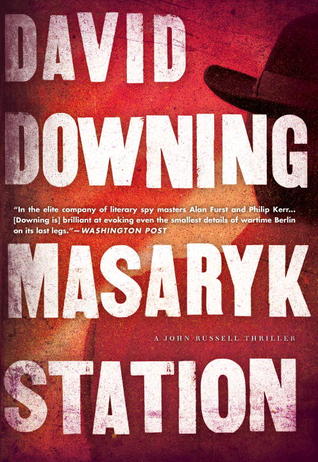
Soho Press's 'Masaryk Station' Close Out Series With A Bang, Receives Much Praise

by Colleen McClintock

Benay client, New York-based publisher, Soho found one of their newest books well-lauded in the September 15 issue of the New York Times Book Review.

Coming out of the Soho Crime imprint, Masaryk Station is the last of a series of six crime novels written by author David Downing. It is set inside a post-WWII political context; a setting that lends itself aptly to suspense and drama.  Likewise, it is a world that can seem impossibly complex to anyone examining it, but as Jan Stuart says in her review in the New York Times Book Review, Downing does an incredible job of “elucidating… post-World War II geopolitics without dumbing down.”

Like most crime series, the books follow the secret, often tumultuous life of a man undercover. In this case, we see John Russell; a journalist-turned-spy who – by the sixth installment of the series – has got himself mixed up in the proverbial snake pit of post-WWI/pre-Cold War Germany. He is working for both the CIA and Stalin’s NKVD , and no longer sees the benefit in either. As Russell scrambles for a way to come out clean, Masaryrk Station quickly starts to show the reader that it will in no way be letting the Russell series go out quietly.


If you are interested in the John Russell series, visit the Soho Crime website to view all of the titles that comprise it. Pick up a copy of Zoo Station – the first installment of the Russell series – to get started today.

Thursday, September 12, 2013

Lee Montgomery's Fall Master Writer's Workshop

Former Tin House editor, Lee Montgomery is teaching an intermediate advanced “master” writer’s workshop in Portland, OR: The Fall Master Writer’s Workshop. The class begins on October 8th and will be held Tuesdays 6-8pm. Tuition is $600 and enrollment is limited to ten people.

“Designed to combine seminar and workshop methodologies, Montgomery employs in-class exercises, outside reading, as well as the classic workshop format. Students can expect to present new work at least twice during the session in addition to a private consultation with Lee during the final weeks of class. For those students who are interested in presenting their work to a broader audience, the class will culminate with a public reading.”

Montgomery has extensive experience as an editor and author. She is the author of The Things Between Us, A Memoir (Free Press, August 2006), Whose World Is This? Stories (University of Iowa Press, September 2007), and Searching for Emily: Illustrated (Nothing Moments Press, October 2007). The Things Between Us received the 2007 Oregon Book Award in creative nonfiction and Whose World Is This? received the 2007 John Simmons Iowa Short Fiction Award and was a finalist for the Ken Kesey Award in Fiction in 2008.

Click here to download the flyer for further information on signing up. We’re sure that this will be a fun and exciting experience for the students (I’d consider signing up if I was in OR) and wish Lee the best of luck in this and future endeavors.