Showing posts with label New York Times. Show all posts

Tuesday, March 25, 2014

Benay Client, Steerforth Press, has a Newly Reviewed Book in the "New York Times"

Benay is always excited to see our clients getting the positive press they deserve. This time the praise is for Steerforth Press, whose new book The Spinning Heart by Donal Ryan, was favorably reviewed by The New York Times.

The Spinning Heart encompasses 21 chapters, each chapter narrated by a different character from a run-down Irish town. Each character has been negatively affected by the economic downturn, in which the local town developer has left town, leaving the laborers stuck. As Daphne Kalotay writes, “Each speaker has been wounded — by the economy as well as by grim parents, cruel lovers, violence, mental illness and the grief of accidental loss.”

“While the material often feels familiar (we even meet the kindhearted town floozy, now aging and abandoned), Ryan writes with compassion, honesty and an appealing deadpan humor.” Kalotay notes her hesitation at reading a chapter narrated by a completely different chapter, but says that Ryan seamlessly connected them so that she “rarely had to check back to keep everyone straight.”


Benay would like to extend their congratulations to the Steerforth Press team and author Donal Ryan and wish them continued success. You can purchase a copy of The Spinning Heart here.

Friday, March 7, 2014

Overlook Press' "The Tooth Fairy" is Reviewed by the New York Times

Benay client, Overlook Press, has Clifford Chase’s most recent masterpiece, “The Tooth Fairy: Parents, Lovers, and Other Wayward Deities (A Memoir),” in the New York Times Book Review. Chase, who is also known for the novel Winkie, delves deep into his past in “The Tooth Fairy.”
Clifford Chase’s unique style of writing captivates the reader as he takes them on a voyage through some of the hardest times in his life. These different hardships range from covering up his sexual orientation by forcing himself into relationships with women to his brother dying of AIDS.However, it is not all bad.

New York Times writer, Alysia Abbott ends her review of Chase’s book saying: “Chase still feels the pain of losing lovers, his parents and his older brother, but in writing about them here he lovingly caresses their memories.”  Ultimately, “The Tooth Fairy” illustrates, among other things, that there is an outlet to all struggles in life.

We are pleased to see the recognition of our client, Overlook Press. “The Tooth Fairy: Parents, Lovers, and Other Wayward Deities (A Memoir)” is for sale on the Overlook Press website.


Jason DeLeo Jr., Intern

Wednesday, February 5, 2014

New Soho Crime Novel, "Cold Storage, Alaska" is Reviewed by the New York Times

Benay Client, Soho Press, has a new crime novel in the New York Times book review. Cold Storage, Alaska is written by John Straley who has written three other books about the snowy northern state for Soho Crime.

Straley’s bold combination of the Church and State-prison may be viewed by the truly religious as a crime in itself, regardless of his story-line and plot. However, when you add in the fact that this novel is based in a small village in northern Alaska that thrives off of booze and survives off of the antique economy of fishing, readers will begin to realize that this book is more inclined to highlight our human struggles rather than disrespect anyone’s God or Church.

Despite the fact that Straley is not the first nor will be the last to tackle the secularization of our once sacred institutions, Straley is nothing short of brilliant when it comes to making the characters very human, and therefore the story that much more believable. Readers can only hope and pray for a better synthesis of vice and religion, two worlds that may not be that far apart.

You can purchase the book on Soho Press’ website.

-Antonio Rivera

Monday, February 3, 2014

The Good, The Bad, and The Young: Letting the Younger Generations Prove Themselves in the Workplace

Photo Credit: Koren Shadmi - NY Times
On Sunday, there was an article in the New York Times, which hit close to home.  As a Millenial who graduated with a Liberal Arts degree, I can sympathize with the trials young people face in the job market. We’re not only competing against each other, but also with those from older generations who were hit by the Great Recession and are thus willing to take an entry-level salary.

Robert Goldfarb, a management consultant for corporations and the author of the aforementioned article, has noted a peculiar bias against the Millenial generation by upper management. He found that many executives are frustrated by their own anecdotal interactions with Millenials and thus transpose these on an entire generation.

For example, executives have told Goldfarb anecdotes such as “’When I was my grandson’s age, I started at the bottom and worked my way up; he’s not willing to do that.’ Or, ‘My daughter majored in philosophy, of all things — how will that get her anywhere?’” Goldfarb explains that even if they don’t have a personal experience, Gen-Yers are usually slumped into the description (the one we’ve heard repeated time and time again) of being self-absorbed and lazy.

“The general message from these leaders is this: More young people would be hired if they had the right qualifications, but too few have the skills and discipline needed to succeed in today’s demanding workplace.”

The Millenials are often slated as the “entitled generation” but are never given the chance to prove themselves as a competent and intelligent bunch. However, most of us are ready to prove ourselves in the work environment. We may appear overeager but that’s certainly better than being apathetic, right?

According to Goldfarb it is. “Rather than waiting for educational institutions or the government to bridge this generation gap, employers should consider accepting some responsibility for introducing young people into the work force.”

Goldfarb explains that hiring and training young people, even those with liberal arts degrees or those who never graduated college, can give employers a leg up when the economy finally rebounds.  After all, we are “a population hungry to prove its value.”


- Marcie Gainer, Executive Assistant

Friday, July 26, 2013

Tin House Books Gains More Repute Through Favorable New York Times Review

by Colleen McClintock

Tin House Books' logo.
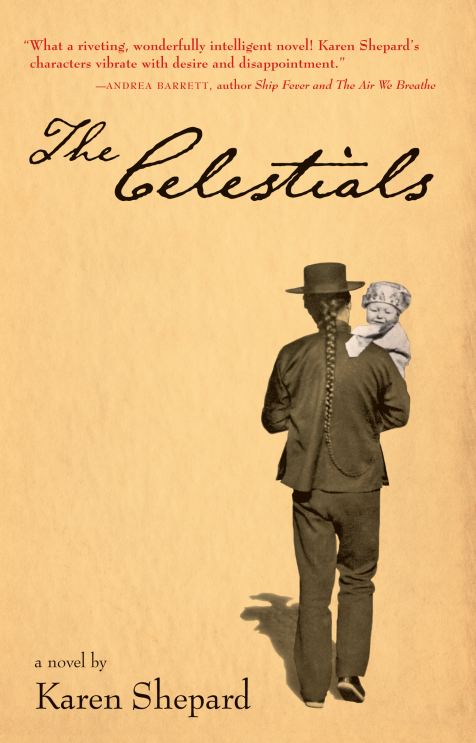
The Tin House Books title, The Celestials, was featured in a New York Times online review today*. The book, written by Karen Shepard, was released by Tin House just one month ago and has already amassed a fair amount of praise from some of Shepard’s more well-reputed peers, such as Darin Strauss and Julia Glass. The Times is likewise generous, calling the novel “richly detailed,” and claiming Shepard’s highly metaphorical style as more genuine and lifelike than anything else.

In The Celestials, Shepard weaves a tale of vivid fiction to life from a basis of stark fact. She takes the real, yet obscure history of Chinese migrant workers in the United States and shoves it into the spotlight, under the sympathetic context of an unhappy married couple. This couple is what drives the plot’s intensity, but the true, more refined quality of the book lies in the subtext; the historical accounts of the Chinese workers. Shepard hits on the historical points of their assimilation, starting with details as facetious as the immigrants’ obsession with photography, all the way to the serious, and tragic passage of the Chinese Exclusion Act of 1882, which barred Chinese immigration into the United States.

In addition to The Celestials, Tin House Books released a huge range of other books this season, not one bit less complex or gripping than Shepard’s. Since March they have released seven fiction titles alone, many of which have received much attention.

Horses of God – a book that has been pegged as the Moroccan equivalent of Paulo Lin’s City of God – won the English Pen Award, and the much talked-about American Dream Machine is in line to become the next Showtime Original Series (at the hands of Dexter, himself, no less).

Tin House plans to release six more titles before the year comes to an end, and if the past is any indication of the future, they will surely close it out with a bang.

If you’d like to learn more about Tin House Books has to offer, please visit their website by clicking here.

*The review will be published again in print in this Sunday’s New York Times Book Review.

Monday, June 10, 2013

Tin House Gains More Speed with N.Y. Times Rave Review of 'American Dream Machine'


by Colleen McClintock

Tin House Books saw yet another rave review of Matthew Specktor’s novel American Dream Machine appear in the print copy of the New York Times’ June 2nd Sunday Book Review. The same review was published early on the New York Times website, the previous Friday.

In laymen’s terms, the exposure that both Tin House and Specktor received within one single weekend was downright impressive. The review was featured on the eleventh page of the Book Review section, and took up the entire space of the page; a feat not easily achieved in the Times.  It was written by Christine Sneed, a well-established author, herself. It is perhaps because of this that Sneed was able to tap into the sentimentality of Specktor’s novel in her review, calling its dismal tone “elegaic” and deeming it as a “hip bildungsroman” narrated by the protagonist, Nate, in the fashion of a “fever dream.”

A photo of Matthew Specktor featured in the Times' review
of American Dream Machine, June 2.
This is arguably the biggest of praises that Tin House has seen this year via American Dream Machine, but it is definitely not the first, as the Times – and others – have featured smaller-scale reviews of the book since its April release.

But it is not just novels like American Dream Machine that give Tin House its chutzpah; titles are only part of it. There are factors like last year’s VIDA count that also come into play.

The VIDA count is an annual survey taken by the feminist literary group, VIDA, to see where the most gender equality lies in the world of publishing. In 2012 Tin House stood out among the lot as one of the most progressive in terms of gender balance, along with fellow Benay client, Granta Magazine.

Tin House also reinforces itself as a living, breathing institution through the yearly workshops they hold for up-and-coming writers. They are residential programs run by the very same editors of Tin House Books and of their sister lit mag, Tin House Magazine. The workshops are entered strictly through application and acceptance, but hold little pretense elsewhere and promise much growth for those who enroll. It is Tin House’s way of aiding new writers in reaching the successes that authors like Specktor have reached. In this, they ensure the survival and perseverance of a literary tradition based on craft, style, and most importantly, passion.

If you’d like to learn more about Tin House Books, please feel free to visit their website by clicking here. To see excerpts from American Dream Machine, please visit the book's page on the Tin House website. 

Monday, March 11, 2013

Soho Press's Cara Black has done it again - and this time in Montparnasse!


Murder Below Montparnasse
author, Cara Black
I think it’s a bit indisputable that today’s generation of young Americans very accurately channels the wily ex-pats of the 1920s.  Frankly, we pride ourselves on it.  Any of my friends would give anything to romp around the glowing Paris streets at night, sipping Sazerac to their hearts delight, dancing with Djuna Barnes, and musing to F. Scott and Zelda about what is to be young and alive.  They are sensibilities that we can’t help but feed into; it’s the artist in all of us!

This is precisely why, when I say Cara Black’s new novel Murder Below Montparnasse has nailed it, I’m talking down into the floorboards for good.  Black takes all of the young dreamer sensibilities that are relevant today and mixes them with her characteristically elusive, keep-you-guessing style to create a new and exciting genre of literature that’s at once accessible and complex.

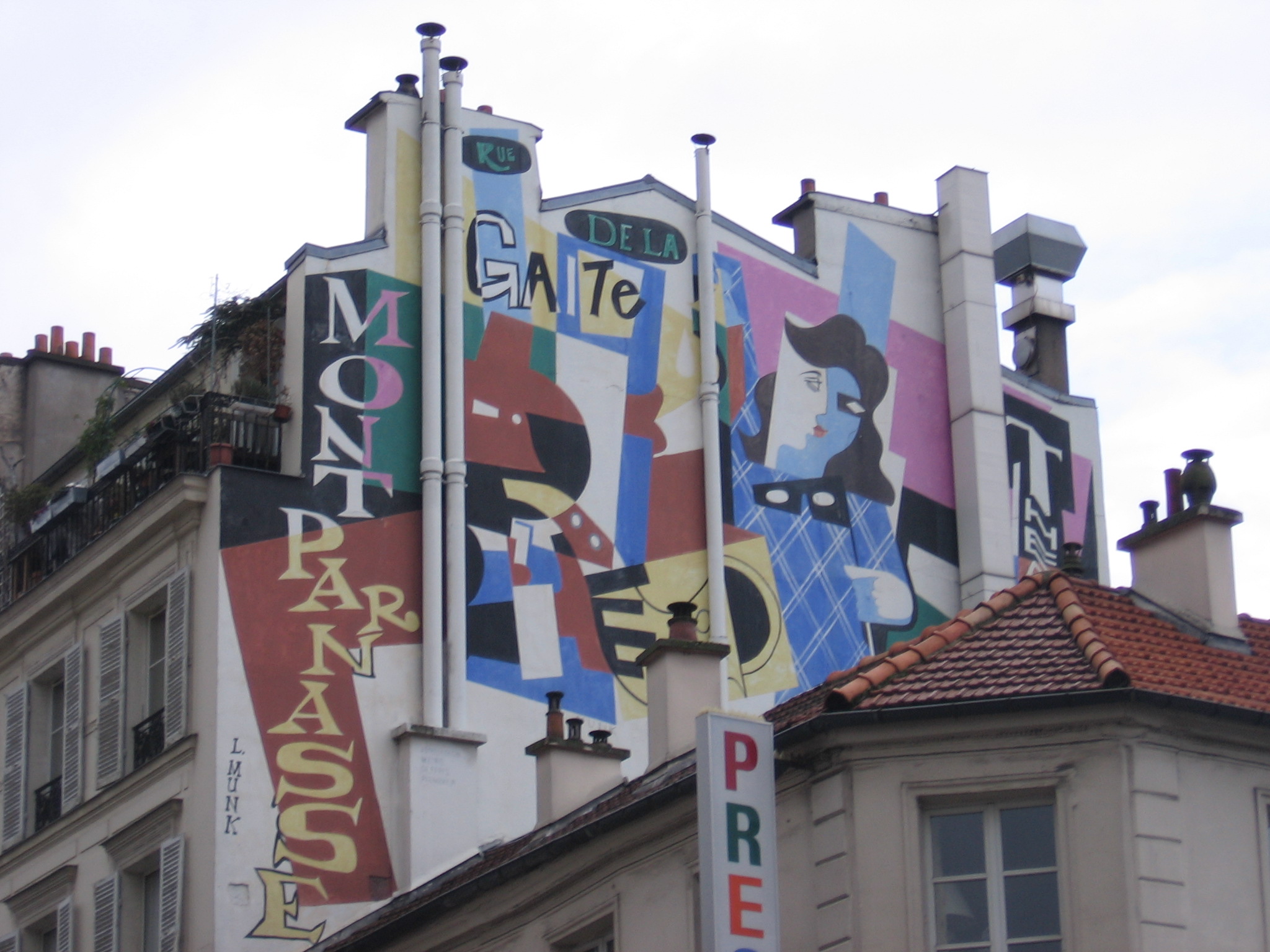
Marilyn Stasio lauds Black in her recent New York Times book review, calling Montparnasse a neighborhood, “rich… for the purposes of a plot that hangs on a Modigliani canvas and involves Russian émigrés and Surrealist artists…” – and boy is she right.  Montparnasse is historically one of the most artistically concentrated areas of Paris, hosting painters, poets and writers like Picasso, Joyce and Hemingway in its sprawling bars and cafes.  
A building in Montparnasse painted, no doubt, in
tribute to the many artists that have frequented it's streets.
The novel’s protagonist, Detective Aimeé Leduc, gets caught up in a bit of this history herself, having been mysteriously enlisted by a Russian man named Yuri Volodya to protect a – you guessed it – prized Modigliani painting.  Aimeé is thrown into what seems to be Black’s bizarre and twisted take on the embodiment of Golden Age Syndrome, where the seemingly desirable sensibilities of a highly romantic age are shrouded in deceit and betrayal. 

If you would like to get a taste of what Black’s novel has to offer, I suggest visiting the Soho website, where you will find a large excerpt of the novel available.  If you like what you see – and I have no doubt you will – there is further good news.  Murder Below Montparnasse is just one in a series of thirteen murder mysteries by Cara Black, which collectively comprise the Aimeé Leduc investigations.  Each book in the series is set in a different section of Paris; together they are a literary map, rich in French cultural history and insight into the delightfully seductive Parisian landscape.

Learn more about Cara Black, and get a chance to meet her on her nationwide book tour by clicking here.

- Colleen McClintock

Tuesday, February 5, 2013

Hogarth Hogs the Spotlight

British painter William Hogarth is known for being the most honest artist of 18th Century. His depictions of so-called “modern moral subjects” were crude, yet nothing was capable of capturing the repugnant reality of East London in more vivid detail. Hogarth’s portrayal of the underbelly of the metropolis is what lead author, Michael Dean, to use his persona as the lead character in his new title, I, Hogarth. This whimsical tale from Duckworth, an imprint of Overlook Press, with its surprising historical accuracies, is receiving praise only days after its release date (Feb.1, 2013), appearing in this week’s edition of The New York Times Sunday Book Review.
It’s easy to see why the heralded New York newspaper refers to Duckworth Overlook’s title as “gritty, bawdy, and funny.” Following a fictional Hogarth through his poverty stricken youth and rise to fortune from the rotten alleys of East London, I, Hogarth highlights the character that was William Hogarth in a way his paintings never could. Dean’s character describes his work as an engraver (a job Hogarth had to work on his way to becoming a renowned artist) as “scratch[ing] away laboriously like a whore with the clap, easing her itch.” The use of witty yet profuse language emulates Hogarth’s artwork flawlessly, especially “A Harlot’s Progress,” which chronicled an innocent country girl’s immoral demise in the cesspool of a city Harlot called home.
From his pants-dropping shenanigans with prostitutes to his recollection of theater crowds that smelled “like a dead dog rotting in the Devil’s privy,” Harlot’s character embodies 18th century life in London. He satirizes the moral decline of modern society while displaying immorality of his own, contracting syphilis and endangering his wife yet freely criticizing all those around him (even the Prime Minister).
Author, “Dean[,] weaves Hogarth’s opinion on art into the narrative” and “paints with words as Hogarth did with his brush”(New York Times). The boisterous and perverse character of Harlot, as well as his intriguing journey to stardom, is now available for your reading pleasure, as I, Hogarth is now available for purchase online and in bookstores near you. I encourage all readers of a mature enough age to pick up a copy and enjoy the comedic and captivating new Duckworth/Overlook title.

Monday, June 20, 2011

Stagestruck by Peter Lovesey, the Latest in British Detective Fiction

A new release from Soho Crime, Peter Lovesey’s Stagestruck is the latest in a series of mysteries featuring Detective Superintendent Peter Diamond. His team is called in to investigate a series of incidents at the Theater Royal of Bath. First, aging pop star Clarion Calhoun, hired to play the lead in the latest production, is scarred by acidic stage makeup during her first performance, followed by the death of the woman who applied her makeup. A New York Times book review calls Stagestruck “a brilliantly conceived and smartly executed mystery” and notes “As always, the plot’s the thing with Lovesey, and the solution to the mystery of Clarion’s disfigurement, while arrived at fair and square, is stunning. But the story also has genuine depth and dimension.” We can’t wait to pick up a copy to find out how this exciting story plays out.

Tuesday, June 7, 2011

Short Stories That Every Neurotic Can Enjoy: "Someday This Will Be Funny"


Red Lemonade scores a New York Times book review with author Lynne Tillman’s book of short stories, Someday This Will Be Funny.  The review praises Tillman as “A terrific prose stylist whose work should have wide appeal.”  The short stories are an engaging read and are up Red Lemonade’s site for those intrigued by her characters and their neuroses.  For instance the story “That’s How Wrong My Love Is” painstakingly details a narrator who forges an obsession with a couple of mourning doves nesting in the empty planter of an adjacent apartment. Watching the doves becomes a ritual, and at some point, the narrator even considers buying a telescope to better observe the birds, only to “remember Rear Window,” concluding that to use a telescope in New York City is “dangerous or at least provocative.” The speaker seems barely aware of his (or her) bizarre behavior, but is quick to judge the hoarding habits of a downstairs neighbor. Her public life as a “bubbly young woman who zips happily around the neighborhood” is so different from her private life as a hoarder that the narrator goes as far as to try and diagnose her as “possibly a schizophrenic.”

In the case of the mourning dove fanatic and the characters of other stories from Someday This Will Be Funny, the characters lack the self-knowledge to obtain their true desires. The New York Times book review puts it perfectly, “Inevitably, painfully, what Tillman’s characters ask for and pursue has little to do with what they actually want.”